

Blogs
Nepal Is Open for Tourism: Kathmandu, Pokhara, Chitwan, Lumbini, Annapurna & Major Regions Welcome Travelers
Nepal Is Open for Tourism — The Mountains, Cities, Culture and Wildlife Are Waiting
If recent headlines about the August 2026 floods have made you wonder whether Nepal is still safe and open for travel, the answer needs some geographic context.
Nepal Tourism Open
A serious and devastating flood affected communities along a specific river corridor in northern and central Nepal on August 26, 2026. The disaster caused tragic loss of life and major damage to roads, bridges, hydropower infrastructure and settlements in areas connected to the Bhote Koshi–Trishuli river system.
But Nepal is a large and geographically diverse country. One flood corridor does not represent the entire country, nor does it mean that all of Nepal's tourism destinations have been affected.
For travelers planning a holiday, trek, cultural journey, wildlife safari or mountain adventure, many of Nepal's best-known destinations remain accessible and continue to welcome visitors.
Kathmandu, Pokhara, Lumbini, Chitwan, Bandipur, Nagarkot, Everest, Annapurna, Manaslu, Kanchenjunga and Makalu remain important options for travelers, subject to normal local weather and transportation conditions.
The key is to understand where the disruption actually occurred and where it did not.
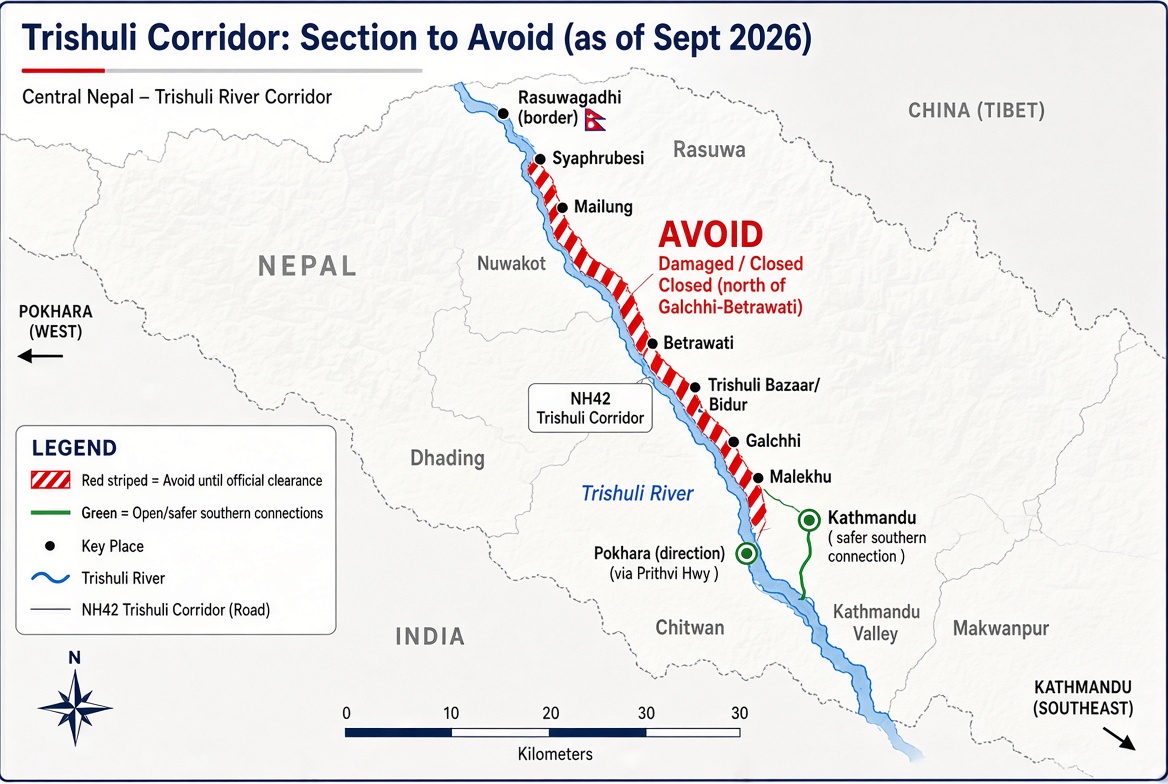
The flood followed a connected water system beginning near the Nepal–Tibet border and moving through the Bhote Koshi and Trishuli corridor. The affected areas included parts of Rasuwa, Nuwakot, Dhading, Gorkha, Tanahun, Nawalparasi and Chitwan districts.
At the same time, Nepal's major tourism regions are spread across different landscapes, watersheds and mountain systems.
That means travelers do not need to view Nepal as a single affected destination.
Instead, think region by region, route by route and destination by destination.
What Happened in Nepal?
On the morning of August 26, 2026, a major glacier and rockslide-related event near the Nepal–Tibet border triggered a powerful flood that entered the Lhende River on the Tibetan side before feeding into the Bhote Koshi and Trishuli river system in Nepal. The resulting surge traveled along a substantial section of the Trishuli corridor.
The impact was devastating for communities located directly along the river system.
Roads and bridges were damaged, hydropower infrastructure was affected, settlements were hit, and the important Gyirong Port/Rasuwagadhi border connection was disrupted.
The humanitarian consequences have been severe, and official casualty and missing-person figures have continued to change as rescue and identification efforts progress.
This article is therefore not intended to minimize the disaster.
The purpose is to provide a clear tourism perspective:
The flood affected a specific geographic corridor. It did not close Nepal as a whole.
This distinction is extremely important for international travelers, tour operators, travel agencies and people who are considering postponing their Nepal holiday based only on headlines.
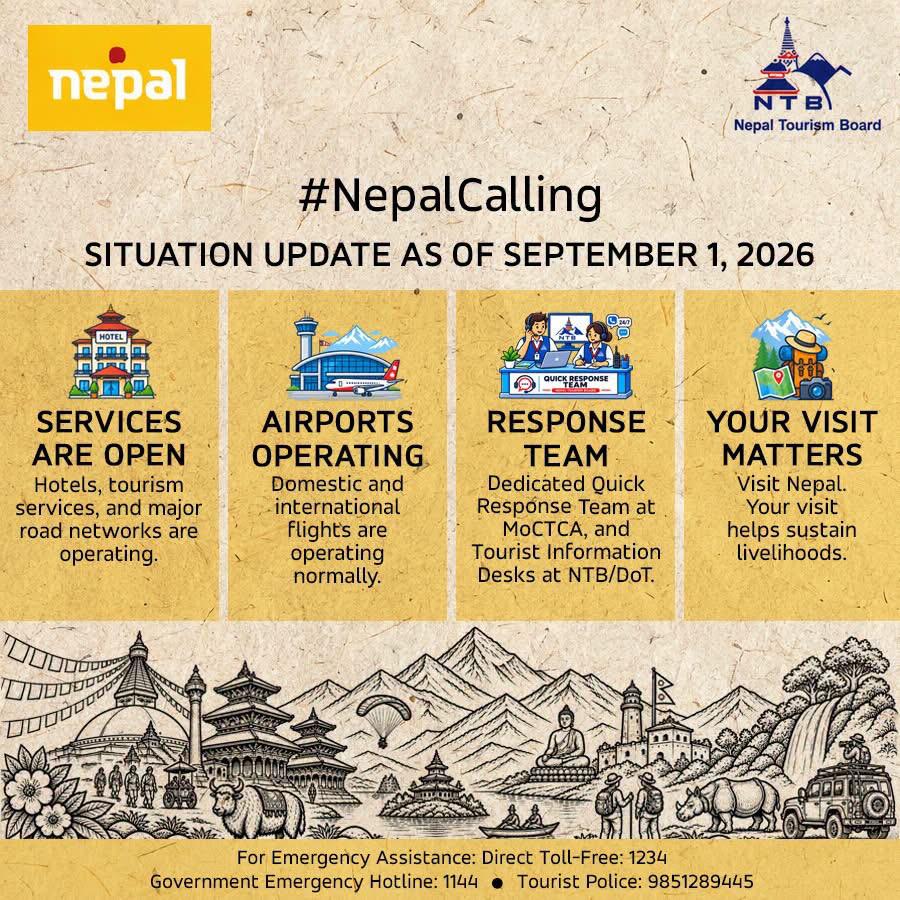
Is Nepal Open for Tourism Right Now?
Yes — Nepal remains open for tourism.
The Nepal Tourism Board continues to promote destinations across the country, including Kathmandu, Pokhara, Lumbini, Chitwan, Everest and Annapurna.
Nepal's tourism appeal has always been based on its extraordinary geographical diversity.
Within one country, travelers can experience:
- Historic cities and UNESCO World Heritage Sites
- Himalayan trekking
- Mountain views
- Buddhist and Hindu pilgrimage sites
- Jungle safaris
- Wildlife and birdwatching
- Lakes and waterfalls
- Adventure sports
- Traditional villages
- Wellness and spiritual journeys
- Cultural festivals
- Scenic road and flight journeys
The recent disaster does not eliminate these experiences.
Instead, travelers should make informed choices and confirm the latest road, flight and trail conditions before departure.
Kathmandu: Fully Open for Tourism
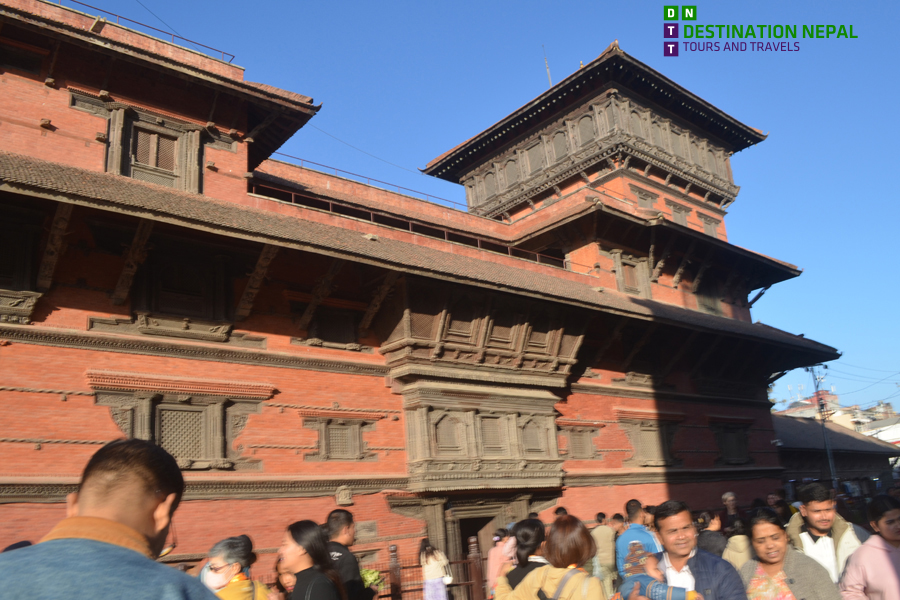
Kathmandu Valley — Culture, Heritage and Spiritual Experiences
Kathmandu remains open for tourism.
Kathmandu is Nepal's principal international gateway and the starting point for many trekking, cultural, spiritual and adventure journeys.
The capital lies outside the direct Bhote Koshi–Trishuli flood corridor described in the attached source. The source specifically notes that Kathmandu itself was not affected by the flooding and that flights, hotels and normal city activities continued.
For travelers arriving in Nepal, Kathmandu remains an excellent place to begin a journey.
Visitors can explore the Kathmandu Valley's extraordinary cultural heritage, including:
- Pashupatinath Temple
- Swayambhunath Stupa
- Boudhanath Stupa
- Kathmandu Durbar Square
- Patan Durbar Square
- Bhaktapur Durbar Square
- Traditional Newari neighborhoods
- Buddhist monasteries
- Hindu temples
- Local markets and restaurants
Kathmandu is more than an arrival point.
It is a destination in its own right.
For first-time visitors, two or three nights in the Kathmandu Valley can provide an excellent introduction to Nepal's history, architecture, religion, food and living culture.
The Nepal Tourism Board lists Kathmandu among the country's principal tourism destinations.
Status: FULLY OPEN FOR TOURISM
Pokhara: Fully Open for Tourism
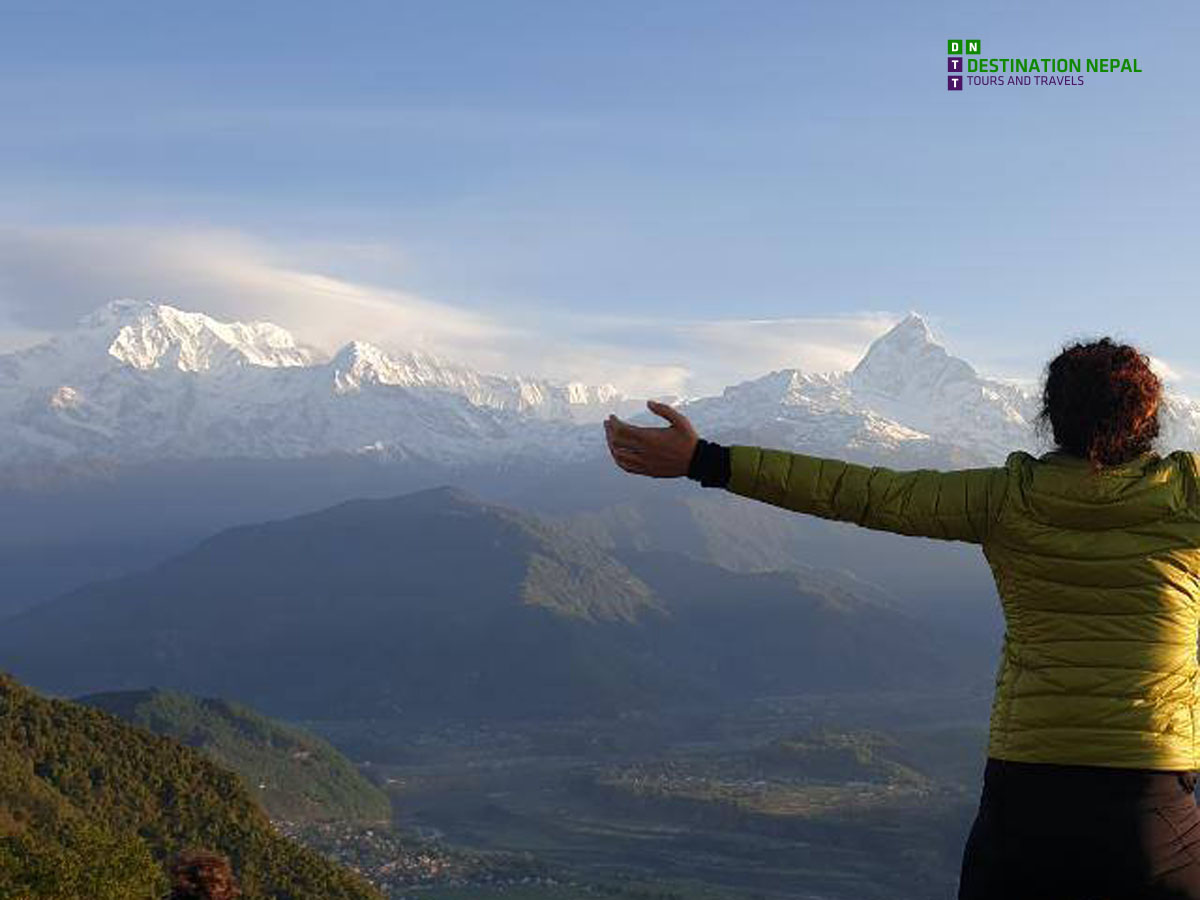
Pokhara — The Gateway to Annapurna
Pokhara remains open and is one of the best choices for travelers looking for a combination of Himalayan scenery, relaxation and adventure.
Pokhara is famous for its spectacular views of the Annapurna range and its lakeside atmosphere. The Nepal Tourism Board describes Pokhara as both a relaxing holiday destination and a gateway to mountain adventures.
Visitors can enjoy:
- Phewa Lake boating
- Tal Barahi Temple
- World Peace Pagoda
- Sarangkot sunrise
- Annapurna mountain views
- Paragliding
- Hiking
- Mountain biking
- Davis Falls
- Gupteshwori Cave
- International Mountain Museum
- Lakeside restaurants and cafés
Pokhara is also the major gateway for many Annapurna-region treks.
For travelers who do not want a long trek, Pokhara itself offers plenty of experiences.
A sunrise from Sarangkot, a peaceful morning beside Phewa Lake, a visit to the World Peace Pagoda or a mountain-view adventure can easily fill several days.
For adventure travelers, Pokhara also provides access to Annapurna Base Camp, Mardi Himal, Ghorepani–Poon Hill and other trekking routes.
The Nepal Tourism Board specifically highlights boating, birdwatching, trekking, mountain biking, paragliding and other adventure activities in Pokhara.
Status: FULLY OPEN FOR TOURISM
Annapurna Region: Fully Open
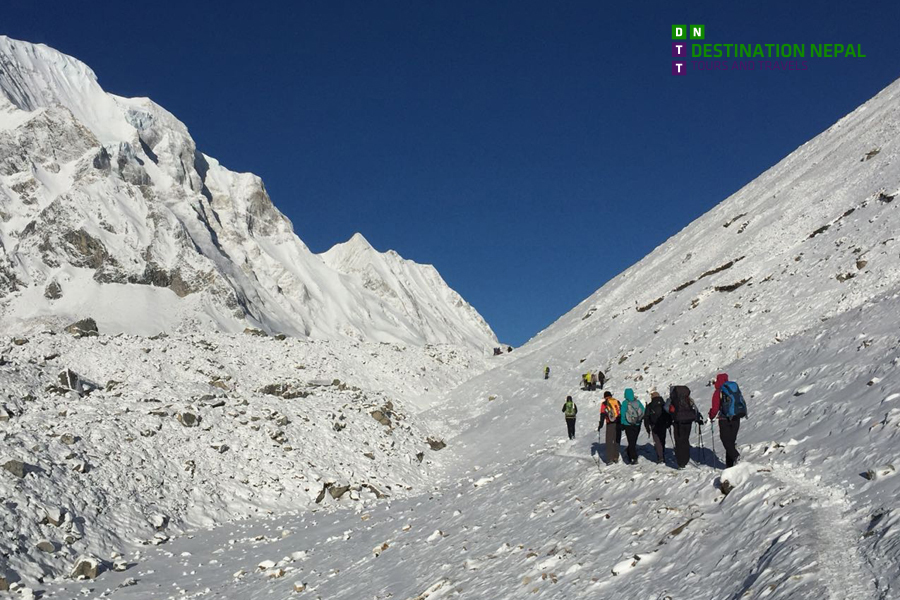
Annapurna — One of the World's Great Trekking Destinations
The Annapurna region remains fully open according to the source material used for this article.
This is particularly important because Annapurna is one of Nepal's most popular trekking destinations.
The region includes some of the country's best-known journeys:
Annapurna Base Camp
The Annapurna Base Camp trek takes travelers through beautiful mountain villages, rhododendron forests and dramatic Himalayan landscapes.
Typical highlights include:
- Ghandruk
- Chhomrong
- Dovan
- Machhapuchhre Base Camp
- Annapurna Base Camp
The sanctuary eventually opens into a spectacular mountain amphitheater surrounded by Himalayan peaks.
Annapurna Circuit
The Annapurna Circuit provides one of the most diverse trekking experiences in Nepal.
The route travels through the Marsyangdi Valley, Manang and the high mountain landscape before crossing Thorong La Pass and descending toward Muktinath and the Kali Gandaki Valley.
The journey can include:
- Besisahar
- Chame
- Pisang
- Manang
- Thorong La
- Muktinath
- Jomsom
- Marpha
- Kali Gandaki Valley
Ghorepani–Poon Hill
For travelers with limited time, the Ghorepani–Poon Hill trek offers Himalayan scenery in a shorter itinerary.
Poon Hill is particularly famous for sunrise views over the Annapurna and Dhaulagiri ranges.
Mardi Himal
Mardi Himal offers another popular short Himalayan trek from the Pokhara area, with beautiful ridge walking and mountain scenery.
The Nepal Tourism Board identifies Annapurna Conservation Area as one of Nepal's premier trekking areas, extending across Kaski, Mustang, Manang and Lamjung.
Status: FULLY OPEN FOR TREKKING AND TOURISM
Everest Region: Fully Open
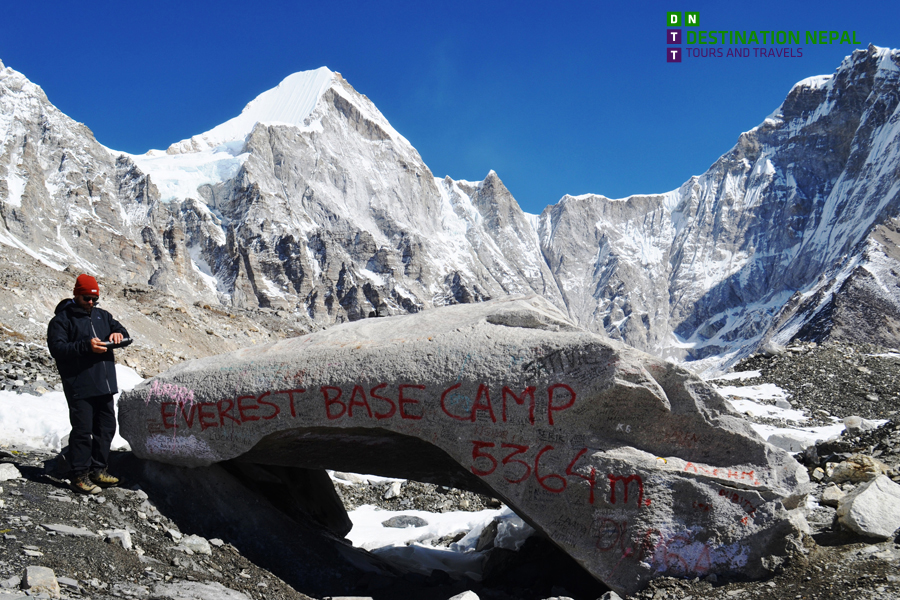
Everest Base Camp — The Dream of a Lifetime
The Everest region remains fully open.
The attached source explains that the Everest region is geographically separate from the Bhote Koshi–Trishuli flood corridor and that the trekking infrastructure and trails remain outside the affected area.
The classic Everest Base Camp journey normally begins with a flight toward Lukla before trekking through the Khumbu region.
Major highlights include:
- Lukla
- Phakding
- Namche Bazaar
- Tengboche
- Dingboche
- Lobuche
- Gorak Shep
- Everest Base Camp
- Kala Patthar
Travelers can also consider:
- Gokyo Valley
- Gokyo Ri
- Everest Three Passes
- Khumbu cultural experiences
Everest is not just about standing at Base Camp.
It is also about experiencing Sherpa culture, mountain monasteries, high-altitude landscapes and some of the most spectacular scenery in the Himalaya.
Status: FULLY OPEN
Manaslu Region: Fully Open
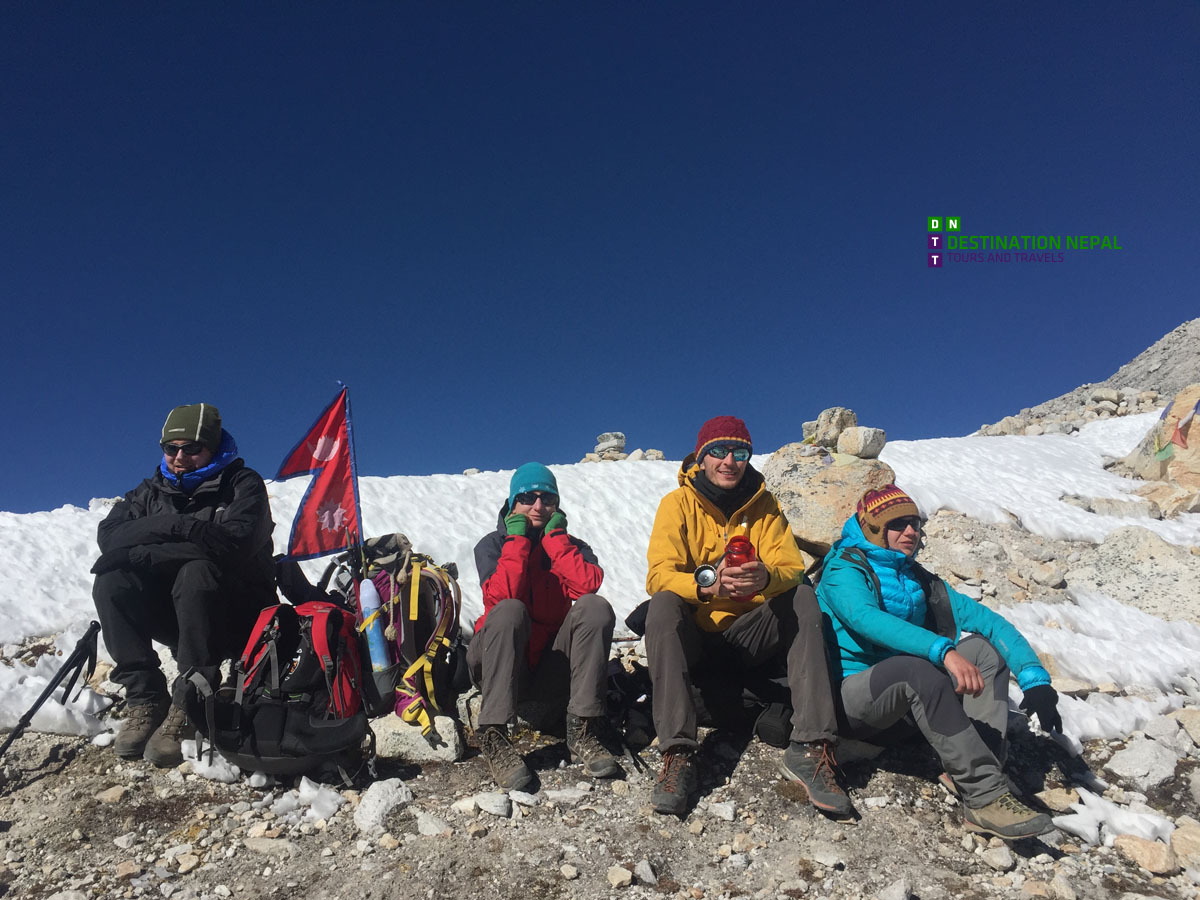
Manaslu Circuit — Wilderness and Culture
The Manaslu region remains fully open.
The Manaslu Circuit offers a quieter alternative to the busiest trekking routes and combines dramatic Himalayan scenery with traditional Tibetan Buddhist culture.
The route follows the Budhi Gandaki Valley and passes through villages such as:
- Machha Khola
- Jagat
- Deng
- Namrung
- Samagaon
- Samdo
- Dharamsala
The high point is the challenging Larke La Pass.
Travelers can also extend their journey into the Tsum Valley.
Manaslu is especially attractive for travelers looking for:
- Fewer crowds
- Remote mountain villages
- Tibetan Buddhist culture
- High mountain landscapes
- Challenging trekking
- Authentic Himalayan experiences
Status: FULLY OPEN
Kanchenjunga Region: Fully Open
Kanchenjunga — Remote Eastern Himalaya
Far in eastern Nepal, the Kanchenjunga region remains open and unaffected by the August flood corridor described in the source material.
Kanchenjunga is home to the world's third-highest mountain and provides a remote trekking experience for travelers seeking wilderness and fewer visitors.
The region features:
- Kanchenjunga Base Camp
- Remote mountain villages
- Alpine landscapes
- Rhododendron forests
- Sherpa, Limbu and Rai cultures
- Dramatic Himalayan views
- Opportunities for wildlife and birdwatching
Kanchenjunga is more demanding than many of Nepal's popular trekking routes, making it particularly attractive to experienced trekkers.
Status: FULLY OPEN
Makalu Region: Fully Open
Makalu — Remote Himalayan Adventure
The Makalu region remains fully open.
Makalu is home to Mount Makalu, one of the world's highest mountains, and the surrounding Makalu Barun National Park provides a spectacular combination of wilderness, forests and high Himalayan landscapes.
The journey can include:
- Tumlingtar
- Num
- Seduwa
- Tashigaon
- Khongma
- Yangle Kharka
- Makalu Base Camp
The region is known for its remote environment, challenging trekking and diverse ecosystems.
For experienced trekkers looking beyond Everest and Annapurna, Makalu offers a completely different Himalayan experience.
Status: FULLY OPEN
Chitwan: Open for Tourism
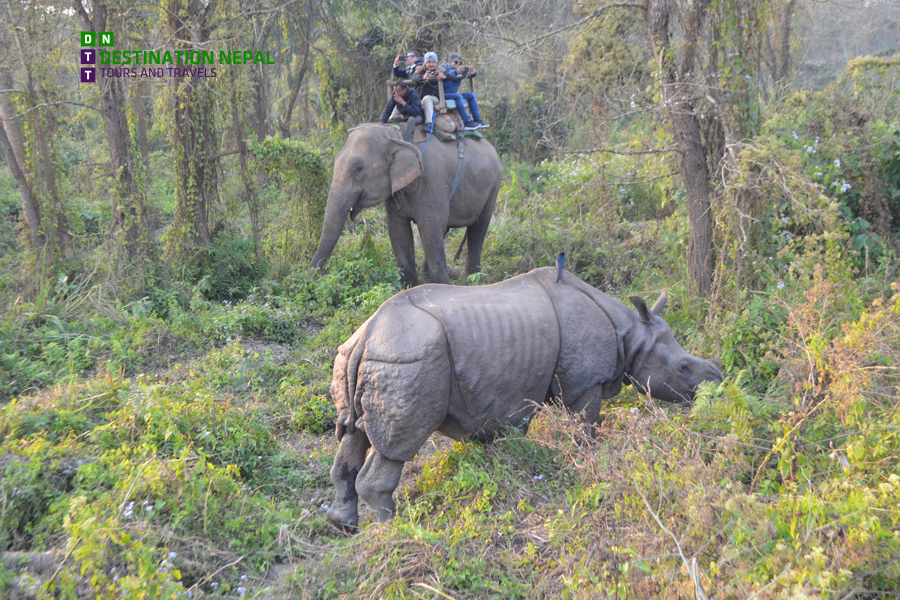
Chitwan National Park — Jungle, Wildlife and Tharu Culture
Chitwan remains an important tourism destination, with tourism activities continuing subject to local access and current conditions.
This point deserves careful wording because parts of Chitwan district were within the wider downstream flood-affected corridor identified in the source material.
However, that does not mean Chitwan National Park tourism as a whole is closed.
The Nepal Tourism Board continues to identify Chitwan as a major tourist destination and describes the area as a leading wildlife and jungle experience.
Chitwan offers a completely different experience from the Himalaya.
Visitors can enjoy:
- Jungle safari
- Jeep safari
- Canoe rides
- Birdwatching
- Nature walks
- Tharu cultural experiences
- Wildlife photography
- Rhino sightings
- Crocodile viewing
- Gharial observation
- Forest experiences
Chitwan National Park is particularly famous for the greater one-horned rhinoceros and the possibility of encountering other wildlife, including deer, crocodiles and, with luck, the Royal Bengal tiger. The Nepal Tourism Board also highlights the park's extensive birdlife.
Therefore, travelers should not automatically cancel a Chitwan itinerary because of flood headlines.
Instead: Confirm the specific road or flight route and local conditions shortly before travel.
Status: OPEN FOR TOURISM — CONFIRM LOCAL ACCESS CONDITIONS
Lumbini: Open for Tourism
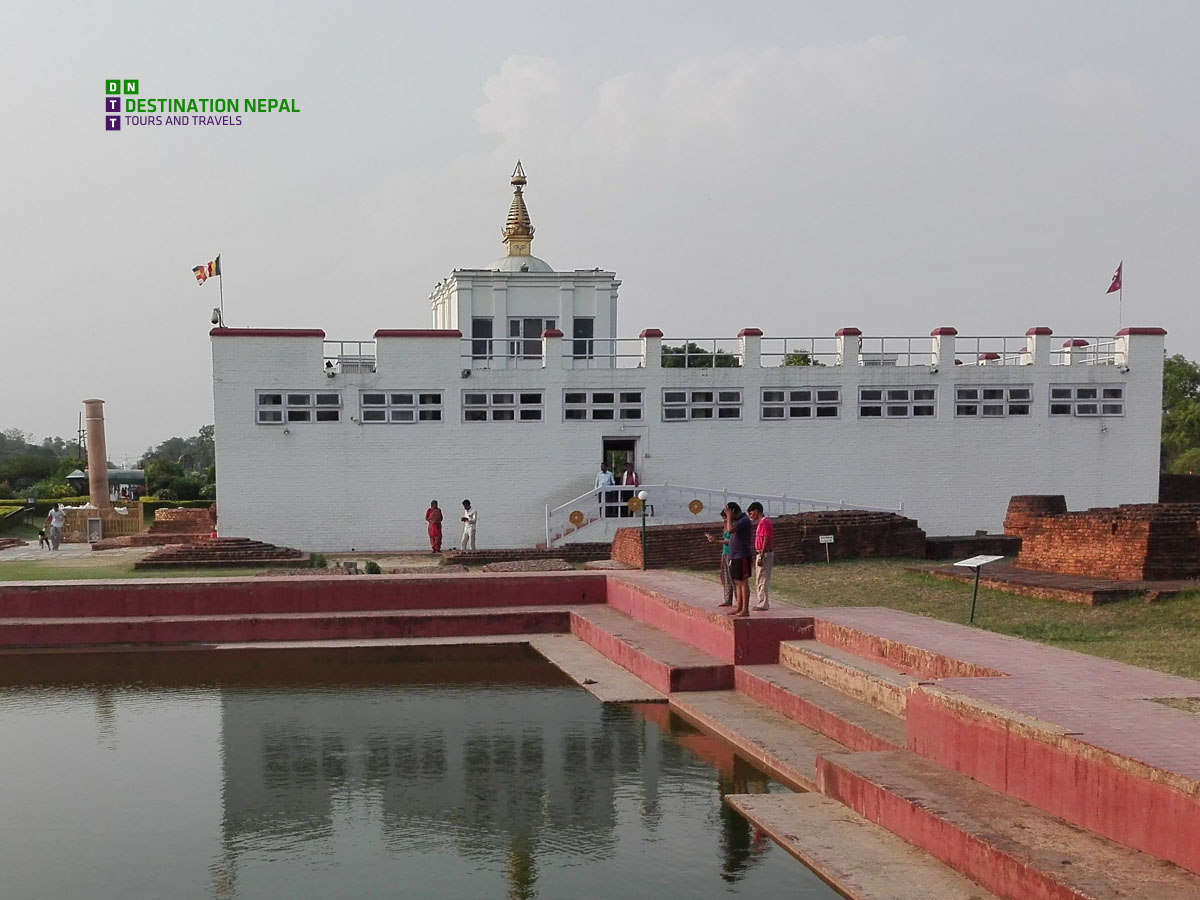
Lumbini — Birthplace of Lord Buddha
Lumbini remains open for tourism and pilgrimage.
Located in southern Nepal, Lumbini is one of the world's most important Buddhist pilgrimage destinations.
The Nepal Tourism Board identifies Lumbini as the birthplace of Shakyamuni Buddha and highlights major attractions including the Maya Devi Temple and Ashoka Pillar.
Travelers can explore:
- Maya Devi Temple
- Ashoka Pillar
- Sacred Garden
- Monastic Zone
- International monasteries
- Lumbini Museum
- Lumbini cultural attractions
- Local villages and communities
Lumbini provides a peaceful contrast to the mountains and busy urban centers.
It is particularly suitable for:
- Buddhist pilgrimage
- Spiritual travel
- Cultural tours
- Meditation journeys
- Photography
- Heritage tourism
- Family holidays
Lumbini can also be combined with Kathmandu, Pokhara and Chitwan to create a comprehensive Nepal tour.
Status: OPEN FOR TOURISM
Bandipur: Open for Tourism
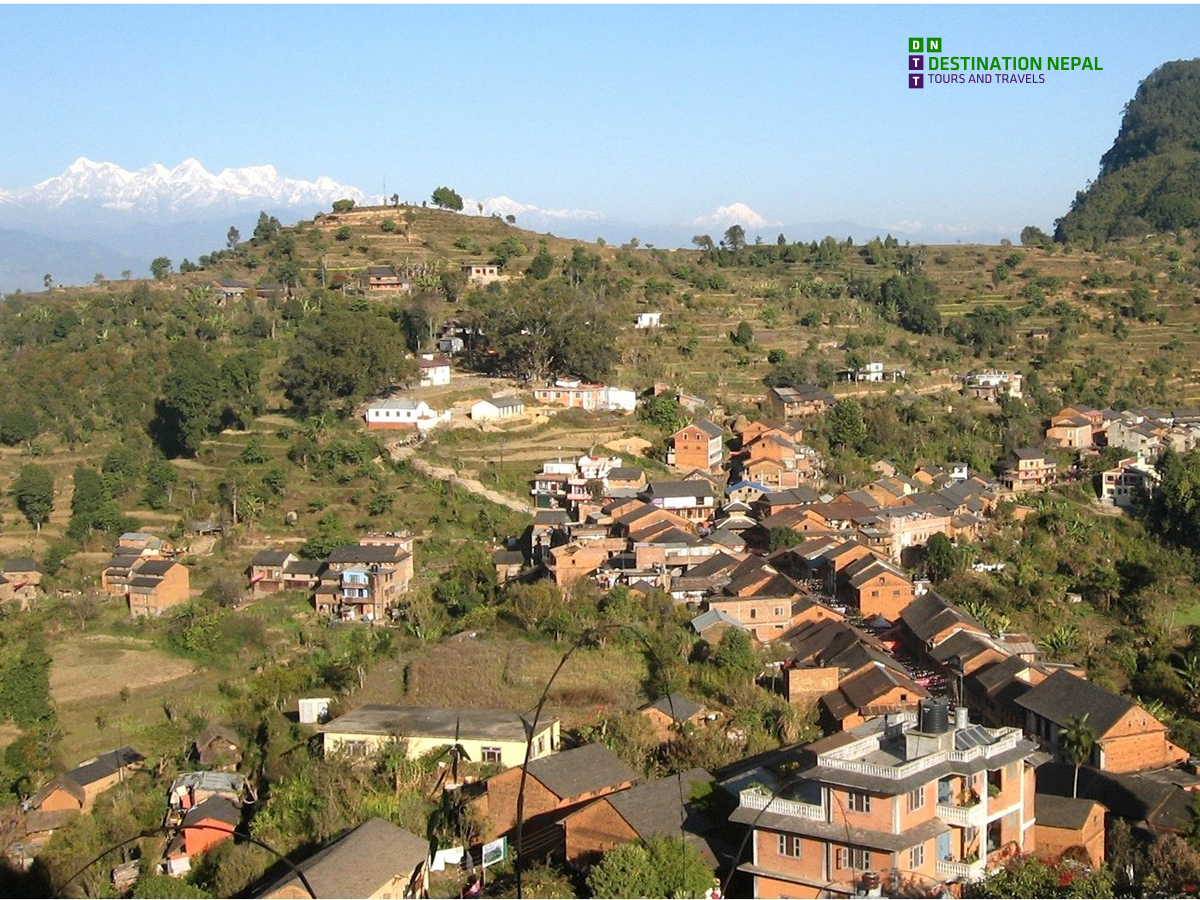
Bandipur — A Beautiful Hilltop Heritage Town
Bandipur is another excellent option for travelers looking for traditional Nepali architecture, mountain views and a peaceful hill-town atmosphere.
Its location makes it an attractive stop between Kathmandu and Pokhara.
Visitors can enjoy:
- Traditional Newari architecture
- Mountain views
- Village walks
- Cultural experiences
- Sunrise and sunset
- Hiking
- Local food
- Relaxing boutique accommodation
For travelers concerned about recent headlines, Bandipur can be considered as part of a flexible itinerary, with road conditions checked before departure.
Status: OPEN FOR TOURISM
Nagarkot: Open for Tourism
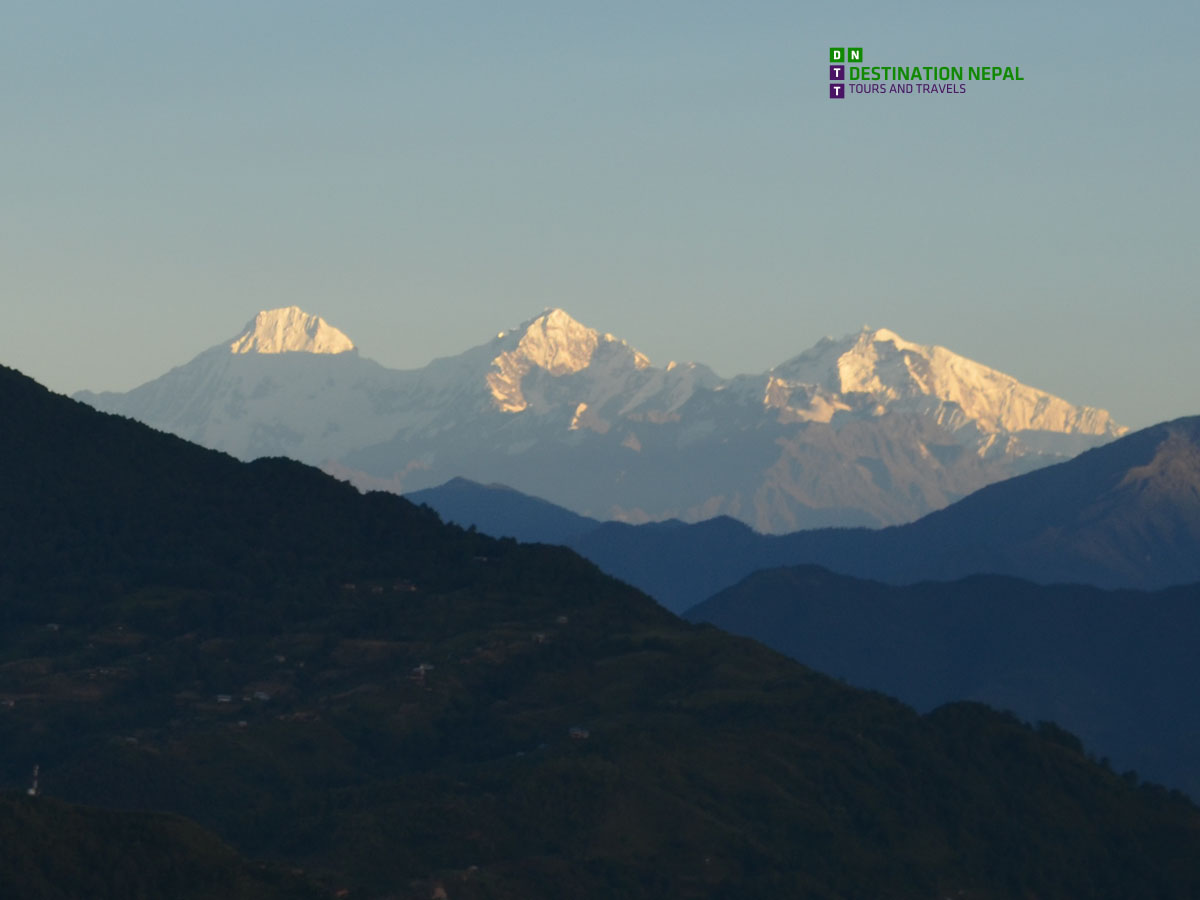
Nagarkot — Sunrise Over the Himalaya
Nagarkot remains a popular short escape from Kathmandu.
It is particularly famous for:
- Sunrise
- Sunset
- Himalayan views
- Mountain photography
- Resort stays
- Short hikes
- Village experiences
A night in Nagarkot can easily be added to a Kathmandu cultural itinerary.
Status: OPEN FOR TOURISM
The One Major Trekking Exception: Langtang
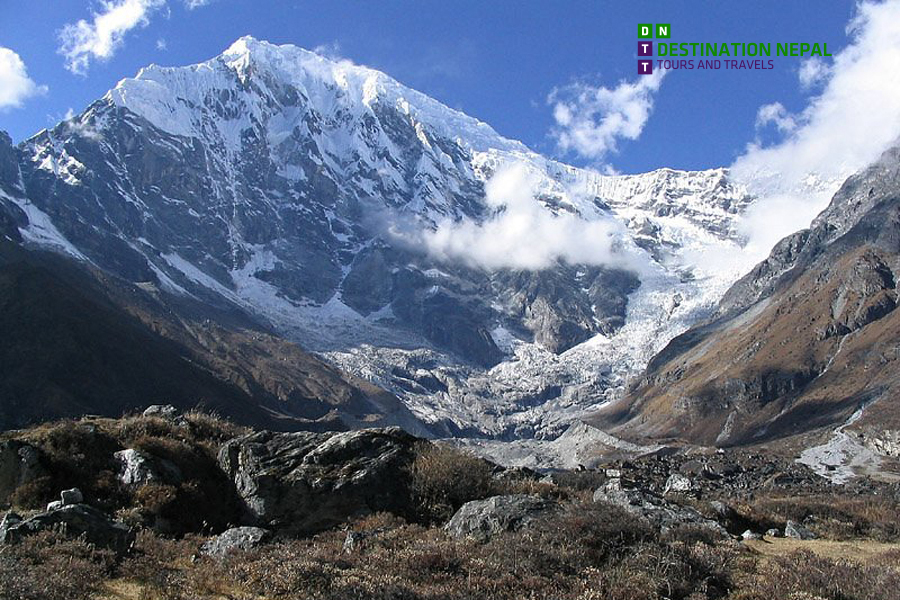
Langtang Valley — Access Currently Restricted
While most major trekking regions remain open, Langtang requires special attention.
The attached source identifies Langtang as the major trekking exception because it sits within the broader flood corridor. The trail itself may not have suffered direct damage along every section, but access through the Dhunche–Syabrubesi and Rasuwagadhi-area corridor has been disrupted.
This means travelers should not treat Langtang in the same way as Annapurna or Everest right now.
If you have already booked:
- Langtang Valley Trek
- Gosaikunda Trek
- Langtang–Gosaikunda Trek
you should speak directly with your trekking operator and check the latest official/local access information.
Status: RESTRICTED / CHECK BEFORE BOOKING
Gosaikunda: Special Caution Required
Gosaikunda is another destination that should be treated differently from most of Nepal's trekking areas.
Because the normal access corridor is connected with the affected Rasuwa and Langtang area, travelers should not assume that a Gosaikunda itinerary is operating normally simply because other trekking regions are open.
For now, travelers should:
- Check current road conditions.
- Confirm trail accessibility.
- Speak with a registered trekking operator.
- Avoid relying on old social-media posts.
- Consider an alternative trekking region if access remains restricted.
Status: ACCESS RESTRICTED / CONDITIONS MUST BE CONFIRMED
Tibet and Rasuwagadhi Land Route: Currently Affected
Another important distinction concerns travel between Nepal and Tibet through the Rasuwagadhi–Gyirong border corridor.
The August flood severely affected infrastructure around the border area, including the Gyirong Port complex on the China–Nepal border.
Therefore, travelers planning:
- Nepal–Tibet overland tours
- Kathmandu–Kerung–Tibet journeys
- Kailash Mansarovar overland itineraries
- Tibet tours using the Rasuwagadhi land border
must confirm current border and road conditions before making arrangements.
This does not mean Tibet travel from Nepal is permanently closed. It means the specific land route through the affected border corridor needs current confirmation.
Where permitted and operational, travelers may need to consider alternative arrangements, including air access, depending on the current Tibet travel rules, permits and operator arrangements.
Status: RASUWAGADHI LAND ROUTE AFFECTED — CHECK CURRENT BORDER CONDITIONS
Why Most of Nepal Was Not in the Flood's Path
Geography is the key to understanding the current situation.
The August flood traveled through a particular connected river system.
The source explains that the flood began near the Nepal–Tibet border, entered the Lhende River, then moved into the Bhote Koshi and Trishuli systems before affecting downstream communities.
Nepal's major trekking regions, however, occupy different watersheds.
For example:
- Everest — Dudh Koshi system
- Manaslu — Budhi Gandaki system
- Annapurna — Marsyangdi and Kali Gandaki systems
- Kanchenjunga — far eastern Nepal
- Makalu — eastern Nepal
The source specifically explains that these major trekking areas were geographically separated from the affected flood corridor.
This is why it is misleading to say:
“Nepal is flooded.”
A more accurate statement is:
“A serious flood affected specific areas of Nepal, while many major tourism destinations remain open.”
That distinction matters enormously to travelers.
Nepal Is More Than the Flood-Affected Corridor
Nepal stretches across an extraordinary range of landscapes.
A traveler can begin with ancient temples in Kathmandu, travel to the lakes of Pokhara, trek beneath the Annapurna range, experience jungle wildlife in Chitwan and meditate in Lumbini — all within the same country.
The Nepal Tourism Board continues to present Kathmandu, Pokhara, Lumbini, Chitwan, Everest and Annapurna among Nepal's key tourism destinations.
This diversity is one of Nepal's greatest strengths.
A disruption in one geographic corridor does not automatically stop tourism throughout the country.
Why Travelers Can Still Visit Nepal
There are several reasons travelers can continue considering Nepal.
1. Most major tourism regions are geographically separate
Everest, Annapurna, Manaslu, Kanchenjunga and Makalu are not located along the same river corridor that carried the August flood.
2. Kathmandu remains operational
Kathmandu was outside the direct flood corridor and remains the country's primary tourism gateway.
3. Pokhara and Annapurna remain major tourism options
Pokhara continues to serve as a major base for Himalayan travel and adventure activities.
4. Nepal offers many alternatives
If one itinerary is temporarily affected, travelers can choose another.
For example, someone considering Langtang could instead explore:
- Annapurna
- Everest
- Manaslu
- Kathmandu Valley
- Pokhara
- Chitwan
- Lumbini
5. Tourism supports local communities
Travel is not only about sightseeing.
Hotels, restaurants, guides, porters, drivers, trekking agencies, handicraft businesses, farmers and many other local communities depend on tourism.
Responsible travel can therefore contribute to economic recovery.
Should You Cancel Your Nepal Trip?
For travelers heading to destinations outside the directly affected corridors, cancellation should not automatically be the first response.
Instead, ask three questions:
Where am I going?
A trip to Annapurna is geographically very different from a trip to Langtang.
How am I getting there?
Road conditions can change after floods, landslides and heavy monsoon rainfall.
What is the current local condition?
Conditions can change quickly in Nepal's mountains and during monsoon season.
The source recommends confirming conditions close to departure and using a licensed, registered local operator.
That is good advice for every Himalayan journey.
Travel Smart: How to Visit Nepal Safely
Even in regions that remain open, travelers should not confuse “open” with “risk-free.”
Nepal is a mountainous country.
Weather can change quickly, roads can be affected by landslides, and rivers can rise rapidly during periods of heavy rain.
The source recommends several practical precautions, including trekking with licensed guides, checking conditions every morning, avoiding swollen rivers, carrying appropriate travel insurance and maintaining flexibility in the itinerary.
Travelers should:
Check conditions before departure
Do not rely exclusively on an old news story, Facebook post or travel blog.
Use a registered local operator
A local operator can check current road, trail, permit and transportation conditions.
Keep flexibility in your itinerary
Allow an extra day or two when possible.
Get appropriate travel insurance
For Himalayan trekking, insurance should include suitable emergency and evacuation coverage.
Follow local advice
If authorities, guides or local communities advise against a particular route, take that advice seriously.
Do not cross dangerous rivers
Never attempt to cross a swollen or fast-moving river simply because it appears short or shallow.
A Great Time to Explore the Diversity of Nepal
Nepal is often presented internationally through a single image: Mount Everest.
But Nepal is much more than Everest.
It is:
Kathmandu for heritage.
Pokhara for lakes and mountains.
Annapurna for trekking.
Everest for Himalayan adventure.
Chitwan for wildlife.
Lumbini for spirituality.
Bandipur for heritage and village life.
Nagarkot for Himalayan sunrise.
Manaslu for wilderness and culture.
Kanchenjunga for remote adventure.
Makalu for serious Himalayan trekking.
And there are many more destinations across the country.
The Nepal Tourism Board highlights a wide range of destinations and experiences, from UNESCO heritage sites and protected areas to trekking, rafting, paragliding, wildlife and cultural tourism.
This diversity means travelers have choices.
Suggested Nepal Itineraries for Travelers
If you are planning a trip after the recent flood, consider itineraries that avoid the currently affected Langtang/Gosaikunda and Rasuwagadhi corridors.
Option 1: Classic Nepal Tour
Kathmandu → Pokhara → Chitwan → Kathmandu
Ideal for first-time visitors.
Option 2: Culture & Spirituality
Kathmandu → Pokhara → Lumbini → Chitwan → Kathmandu
A broader experience combining culture, mountains, spirituality and wildlife.
Option 3: Nepal with Annapurna Trek
Kathmandu → Pokhara → Annapurna Trek → Pokhara → Chitwan → Kathmandu
Ideal for travelers wanting both trekking and sightseeing.
Option 4: Everest Adventure
Kathmandu → Lukla → Everest Base Camp → Kathmandu
Ideal for experienced mountain travelers and trekkers.
Option 5: Short Himalayan Experience
Kathmandu → Pokhara → Ghorepani/Poon Hill → Pokhara → Kathmandu
A good choice for travelers who want Himalayan trekking without a long expedition.
What About the Economy?
There is another important reason to keep traveling responsibly.
Tourism is a major part of Nepal's local economy.
When visitors stay in hotels, eat at restaurants, hire guides, use transportation, purchase handicrafts and trek with local teams, money reaches communities throughout the tourism supply chain.
After a natural disaster, responsible tourism can become part of the recovery process.
This does not mean ignoring affected communities or treating disaster recovery as a tourism campaign.
It means recognizing that Nepal's tourism workers and businesses also need visitors to return when and where it is safe to do so.
Travelers can support Nepal by choosing responsible local businesses and following safety guidance.
Frequently Asked Questions About Nepal Tourism After the 2026 Flood
Is Nepal open for tourists?
Yes. Nepal remains open for tourism, with many major destinations and trekking regions continuing to welcome visitors. Travelers should check specific destination and transportation conditions before departure.
Is Kathmandu safe to visit?
Kathmandu was outside the direct Bhote Koshi–Trishuli flood corridor described in the source material, and normal tourism activities continued.
Is Pokhara open?
Yes. Pokhara remains a major tourism destination and gateway to the Annapurna region. The Nepal Tourism Board continues to promote Pokhara for leisure and adventure tourism.
Is Annapurna open?
Yes. The source identifies the Annapurna region as fully open, with its major trekking routes outside the flood corridor.
Is Everest Base Camp open?
Yes. The Everest region remains outside the affected flood corridor and is identified as fully open in the source material.
Is Manaslu open?
Yes. Manaslu is identified as fully open and geographically separate from the affected flood corridor.
Is Chitwan open?
Chitwan remains a major tourism destination and tourism activities continue, but because parts of the district were within the wider flood-affected corridor, travelers should confirm their specific access route and local conditions before departure.
Is Lumbini open?
Yes. Lumbini remains a major Buddhist pilgrimage and cultural destination in southern Nepal.
Is Langtang open?
Langtang requires special caution. Access through the affected Rasuwa/Syabrubesi corridor has been disrupted, and travelers should obtain current information before booking or traveling.
Is Gosaikunda open?
Travelers should not assume normal access. Because Gosaikunda is connected to the affected Langtang/Rasuwa access area, current road and trail conditions should be confirmed before travel.
Can I travel from Nepal to Tibet by land?
The Rasuwagadhi–Gyirong land corridor was affected by the August flood. Travelers planning an overland Tibet or Kailash journey through this border should confirm current border, road and permit conditions before booking.
Nepal Is Open — But Travel Responsibly
The August 2026 flood was a devastating event, and the suffering of affected communities should never be underestimated.
At the same time, it is important for travelers to understand the geographic reality.
Nepal has not closed.
A specific river corridor was severely affected, while large parts of the country remain outside that affected zone.
- Kathmandu continues to welcome travelers.
- Pokhara continues to welcome travelers.
- Annapurna remains open.
- Everest remains open.
- Manaslu remains open.
- Kanchenjunga remains open.
- Makalu remains open.
- Lumbini remains open.
- Chitwan remains an important tourism destination, with local access conditions to be checked.
- Bandipur and Nagarkot remain options for cultural and scenic travel.
The areas that require particular caution are Langtang, Gosaikunda and the Rasuwagadhi–Tibet land corridor.
This is the message travelers need:
Do not cancel Nepal because of a headline. Understand the geography, choose the right destination, check current conditions and travel responsibly.
Plan Your Nepal Journey with Confidence
Nepal's mountains, cities, villages, temples, wildlife and cultural heritage remain ready to welcome travelers.
If your original plan included Langtang, Gosaikunda or an overland Tibet journey through Rasuwagadhi, speak with your travel operator about alternative arrangements.
If you were planning Kathmandu, Pokhara, Annapurna, Everest, Chitwan, Lumbini or another unaffected destination, there are still many ways to experience Nepal.
For travelers, the best approach is not blind reassurance and not unnecessary fear.
It is informed travel.
- Check the latest conditions.
- Use a registered local operator.
- Keep your itinerary flexible.
- Respect local advice.
- And choose destinations according to their current accessibility.
Nepal Is Open. Nepal Is Diverse. Nepal Is Ready to Welcome Responsible Travelers.
From the temples of Kathmandu to the lakes of Pokhara, from the jungles of Chitwan to the sacred birthplace of Buddha in Lumbini, from the trails of Annapurna to the high Himalaya of Everest, Nepal offers an extraordinary range of experiences.
The flood affected a specific corridor — it did not close the country.
So if Nepal has been on your travel list, don't judge the whole country by one affected route.
Choose the right destination. Check the latest conditions. Travel responsibly. And experience Nepal.
Nepal Tourism Status at a Glance
| Destination / Region | Current Tourism Message |
|---|---|
| Kathmandu | 🟢 Fully Open |
| Pokhara | 🟢 Fully Open |
| Annapurna | 🟢 Fully Open |
| Everest | 🟢 Fully Open |
| Manaslu | 🟢 Fully Open |
| Kanchenjunga | 🟢 Fully Open |
| Makalu | 🟢 Fully Open |
| Lumbini | 🟢 Open for Tourism |
| Chitwan | 🟢 Open — confirm local access |
| Bandipur | 🟢 Open for Tourism |
| Nagarkot | 🟢 Open for Tourism |
| Langtang | 🟠 Access Restricted / Check Conditions |
| Gosaikunda | 🟠 Access Restricted / Check Conditions |
| Rasuwagadhi–Tibet Land Route | 🔴 Affected — Check Current Border Status |
Important: Natural disasters and monsoon conditions can change local road, trail and transportation conditions quickly. Travelers should confirm current conditions with official authorities and their registered local travel/trekking operator immediately before departure.