

Blogs
Gunla Festival in Nepal: A Sacred Month of Newar Buddhist Tradition, Music and Pilgrimage
Gunla Festival in Nepal is one of the most important religious and cultural observances of the Newar Buddhist community of the Kathmandu Valley. Unlike festivals that last for only a day or a few days, Gunla is a sacred month filled with pilgrimage, prayer, traditional music, religious rituals and community activities.
Observed according to the Nepal Sambat lunar calendar, Gunla generally falls around the monsoon season and corresponds approximately to August in the Gregorian calendar. Because it follows the lunar calendar, the exact Gregorian dates change from year to year.
For example, in 2026, Gunla falls during the August-September period. Travelers planning to experience the festival should always check the Nepal Sambat calendar for the exact dates in the year they plan to visit.
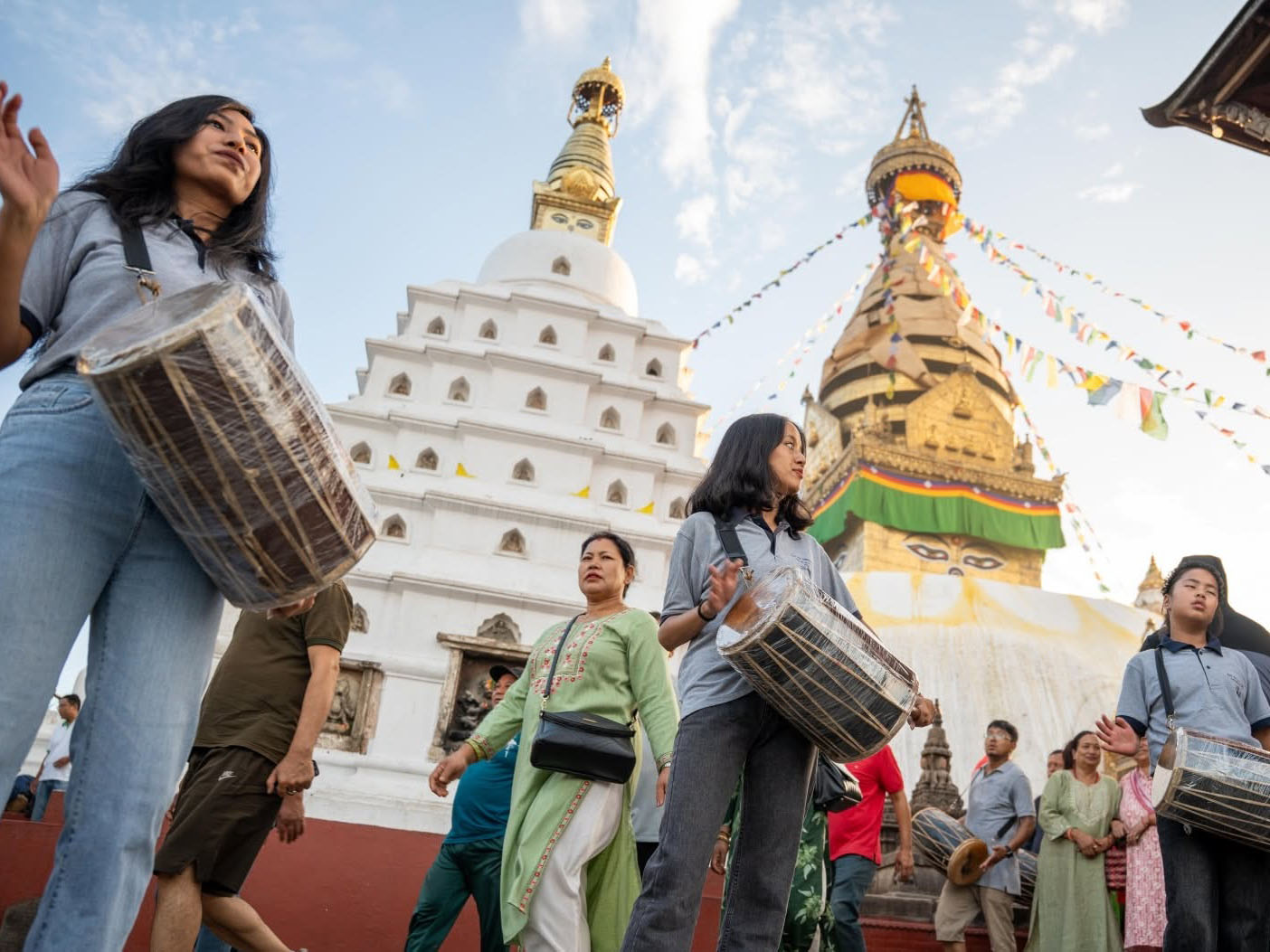
During this special month, devotees visit Buddhist stupas, monasteries, bahas, bahis and neighborhood chaityas, often beginning their pilgrimage before sunrise. Traditional Gunla Bajan music accompanies many of these processions, creating a unique spiritual atmosphere throughout the historic streets of Kathmandu Valley.
For travelers interested in Nepal's history, Buddhism, Newar culture and living heritage, Gunla provides an opportunity to experience a side of Kathmandu that goes far beyond its famous monuments.
What Is Gunla Festival?
Gunla, also known as Gunla Parva or Gunla Dharma, is the sacred month of the Newar Buddhist tradition.
It is the tenth month of the Nepal Sambat lunar calendar and is one of the most important periods of the year for Newar Buddhists. The month is associated with religious devotion, pilgrimage, scripture recitation, charitable activities and traditional Buddhist music.
The tradition is closely connected with the ancient Buddhist practice of the rainy-season retreat, when monks traditionally stayed in one place during the monsoon rather than traveling. This period provided time for meditation, study, teaching and spiritual practice.
Over generations, Newar Buddhist communities in the Kathmandu Valley developed their own rich traditions around this sacred period. Gunla therefore combines Buddhist religious practices with the distinctive cultural heritage of the Newar community.
The festival can be experienced throughout Kathmandu, Lalitpur and Bhaktapur, with activities taking place at major Buddhist sites as well as smaller neighborhood shrines and traditional courtyards.
Why Is Gunla Important?
Gunla is important because it brings together religion, culture, music and community life.
For devotees, the month is a time to accumulate religious merit through good deeds, pilgrimage, offerings, prayer and other forms of spiritual practice. The name is also traditionally associated with the idea of a month dedicated to merit.
Many devotees wake early in the morning to visit Buddhist shrines. Some recite Buddhist scriptures at home or in sacred courtyards, while others participate in musical processions.
The festival also helps preserve traditional Newar music and community traditions. Gunla Bajan groups continue to pass musical knowledge and religious customs from one generation to another.
This makes Gunla much more than a religious festival. It is an example of living cultural heritage in Nepal, where traditions that developed centuries ago remain part of everyday community life.
When Is Gunla Festival Celebrated?
Gunla does not have one fixed Gregorian date.
The festival follows the Nepal Sambat lunar calendar, so the dates shift each year when converted into the Gregorian calendar. It generally occurs around the monsoon season and is associated with the months of August and September in the modern calendar.
For travelers, this means it is important to check the festival dates for the particular year of travel.
Gunla Festival Dates
The dates can be presented on your website in this evergreen format:
Year Approximate Gregorian Period
2026 13 August- 12 September
Future years Dates vary according to the Nepal Sambat lunar calendar
Note: Exact dates should be checked each year because Gunla follows the lunar calendar.
This approach means your blog remains useful even after 2026 rather than becoming outdated when the year changes.
Gunla and the Nepal Sambat Calendar
Understanding the Nepal Sambat calendar helps explain why Gunla dates change every year.
Nepal Sambat is a traditional calendar closely associated with the cultural history of the Newar people. Gunla is its tenth lunar month.
Because lunar calendars do not correspond exactly to the Gregorian calendar, the beginning and ending dates of Gunla move from year to year.
This is common with many traditional festivals in Nepal. Visitors should therefore check the current Nepal calendar when planning a trip specifically for Gunla.
Swayambhunath: A Major Center of Gunla Pilgrimage
One of the most important places to experience Gunla is Swayambhunath, one of the most sacred Buddhist sites in the Kathmandu Valley.
During Gunla, devotees traditionally make early-morning pilgrimages to Swayambhunath. The journey may include walking in groups, carrying incense and making offerings while traditional musical groups perform Gunla Bajan.
The famous hilltop stupa becomes especially lively in the early morning. Devotees perform pradakshina, or clockwise circumambulation, around the sacred monument as part of their pilgrimage.
The combination of traditional music, religious devotion and the historic architecture of Swayambhunath creates one of the most memorable experiences of the festival.
For travelers, an early-morning visit is particularly rewarding. The atmosphere is generally more peaceful than later in the day, and visitors can observe the traditional pilgrimage without the crowds associated with normal sightseeing hours.
Gunla Bajan: The Traditional Music of Gunla
One of the most distinctive features of Gunla is Gunla Bajan, the traditional Buddhist devotional music associated with the sacred month.
The word "Bajan" refers to music or musical performance, while Gunla refers to the sacred month. Together, Gunla Bajan represents a traditional musical practice deeply connected with Newar Buddhist religious life.
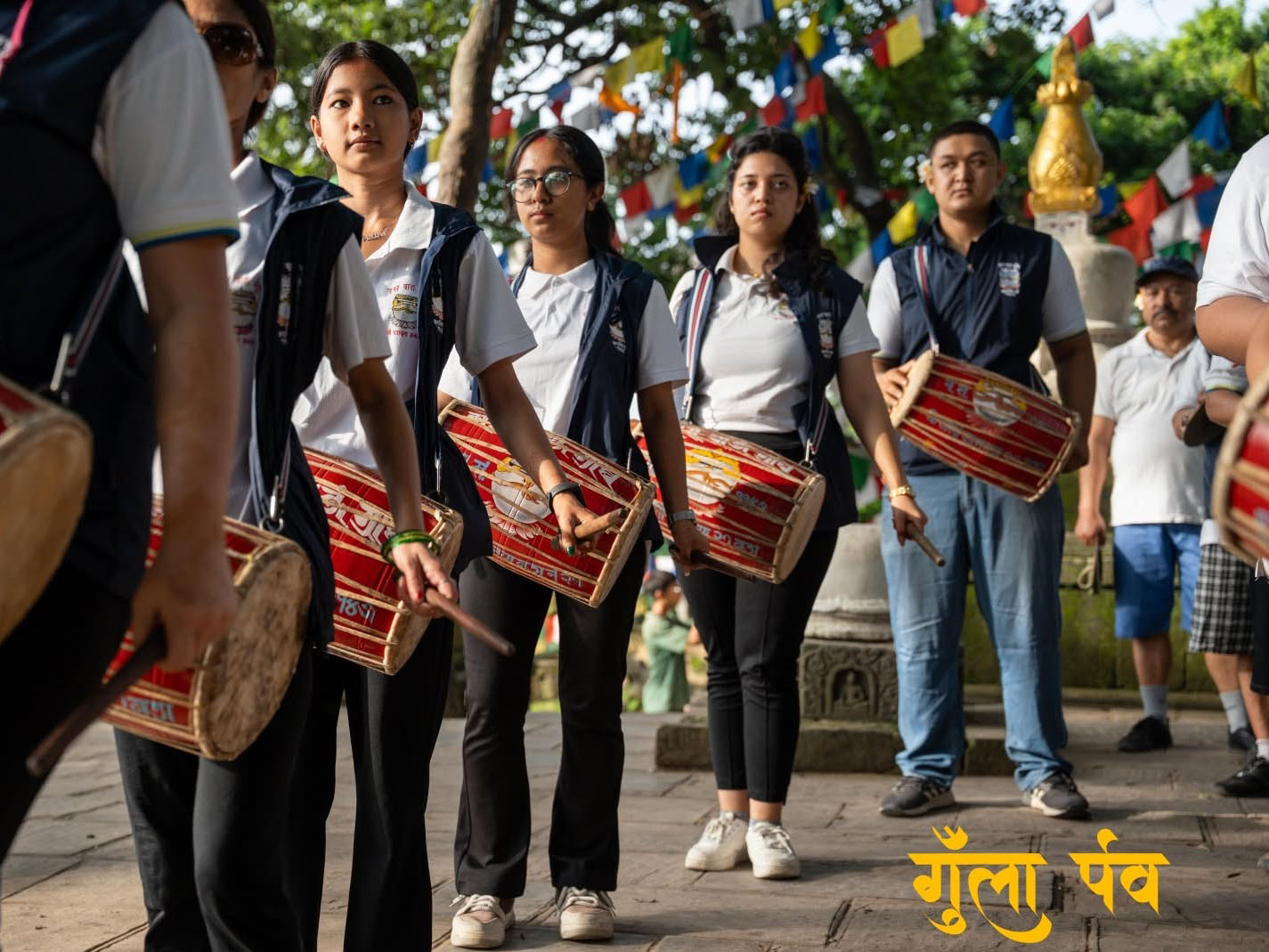
Musical groups associated with different communities and localities organize processions during Gunla. They visit stupas, monasteries, chaityas and other religious sites while playing traditional instruments.
The music may include drums, cymbals, flutes and traditional horns. One of the distinctive instruments associated with Gunla music is the Nyakun, traditionally made from buffalo horn.
The sound of these instruments traveling through the narrow historic streets before sunrise is one of the defining experiences of Gunla.
Gunla Bajan is not simply a form of entertainment. It is an important part of religious observance and a means of preserving the musical heritage of the Newar community.
Early-Morning Processions
Early-morning processions are among the most recognizable traditions of Gunla.
Devotees and musical groups begin their journeys before sunrise, visiting religious sites throughout the Kathmandu Valley.
At Swayambhunath, the steps leading toward the stupa can become filled with pilgrims during the sacred month. Traditional music accompanies the movement of devotees, creating a peaceful yet powerful atmosphere.
For visitors, these processions provide a chance to observe Kathmandu at a different time of day.
Instead of the busy traffic and crowds normally associated with the capital, travelers can experience ancient streets filled with devotional music and pilgrims.
Boudhanath and Gunla
Boudhanath Stupa is another important Buddhist site in Kathmandu and an excellent place to experience the spiritual atmosphere of Gunla.
The large white stupa is surrounded by monasteries, shops, restaurants and traditional neighborhoods. During Gunla, Buddhist devotees visit the stupa for prayer, circumambulation and religious activities.
Boudhanath is particularly significant for visitors who want to understand the wider Buddhist heritage of Kathmandu.
A Gunla cultural experience can therefore combine visits to both Swayambhunath and Boudhanath, while also exploring the smaller Buddhist courtyards and shrines of the valley.
Gunla in Patan
Patan, or Lalitpur, is another major center of Newar Buddhist culture.
The historic city contains numerous bahas, bahis, chaityas and Buddhist shrines. These traditional courtyards and monasteries remain important parts of local religious life.
During Gunla, devotees visit these sacred spaces and participate in prayers, music and other religious activities.
For travelers interested in architecture, Patan is particularly fascinating because Buddhist traditions are closely integrated with the city's historic urban design.
A visit to Patan during Gunla can reveal how temples, courtyards, monasteries and residential neighborhoods have remained interconnected for generations.
Gunla in Bhaktapur
Bhaktapur is also an important destination for experiencing Newar culture and Buddhist traditions.
The historic city is famous for its temples, squares, traditional houses and artistic heritage. During Gunla, visitors may encounter religious activities and traditional practices within different neighborhoods.
Exploring Bhaktapur during the sacred month allows travelers to see how religious traditions continue alongside everyday community life.
Religious Practices During Gunla
Gunla includes a wide range of religious activities.
Pradakshina
Devotees perform pradakshina, or circumambulation, around stupas and sacred monuments.
Walking clockwise around a Buddhist shrine is an important expression of devotion and pilgrimage.
Scripture Recitation
Devotees may recite Buddhist scriptures in homes, monasteries and sacred courtyards during the month.
Scripture recitation is an important part of the spiritual discipline associated with Gunla.
Prayer and Offerings
Visitors may observe devotees lighting lamps, burning incense, offering flowers and making other religious offerings at Buddhist shrines.
Fasting and Religious Discipline
Some devotees observe fasting or adopt dietary and behavioral restrictions during Gunla as part of their religious practice.
These practices can vary between families and communities.
Charity and Good Deeds
Gunla is also associated with charitable activities and the accumulation of merit through helping others and making religious offerings.
This emphasis on generosity is an important part of the spiritual character of the month.
Making Small Stupas
One interesting Gunla tradition involves making small stupas from black clay using traditional molds.
This practice demonstrates how religious devotion can be expressed through small-scale activities within homes and local communities, rather than only through major temples and monuments.
Such traditions help preserve the connection between religious practice and everyday life.
Major Gunla Activities
Gunla is a month-long observance, and different days feature different religious and cultural activities.
Some of the notable observances associated with the Gunla period include:
- Daily pilgrimage to Buddhist shrines
- Gunla Bajan musical processions
- Bahidyah Bwayegu
- Pancha Dan
- Mataya
- Religious image displays
- Scripture recitation
- Offerings and charitable activities
- Visits to bahas, bahis and chaityas
The exact dates of these activities vary according to the lunar calendar and local traditions.
Therefore, travelers planning to attend a particular Gunla event should check the festival calendar for the year of their visit.
Gunla and Newar Cultural Heritage
The Kathmandu Valley is famous for its temples, stupas and historic cities, but its greatest cultural value comes from the communities that continue to maintain these traditions.
Gunla demonstrates this particularly well.
The festival connects:
- Buddhist religious traditions
- Newar music
- Traditional architecture
- Community organizations
- Religious art
- Pilgrimage
- Charity
- Family traditions
- Local neighborhood life
The continuation of Gunla Bajan is especially important because traditional music is often learned through community participation rather than formal institutions.
Older generations pass musical knowledge to younger members, helping preserve a tradition that might otherwise disappear.
Why Travelers Should Experience Gunla
Nepal has many famous festivals, but Gunla offers a different kind of cultural experience.
It is not primarily a large public spectacle designed for tourists. Instead, it is deeply connected to the daily religious life of local communities.
Travelers can experience:
Traditional music: Listen to Gunla Bajan performed by local musical groups.
Living heritage: See ancient traditions practiced by contemporary communities.
Buddhist culture: Visit important Buddhist pilgrimage sites during a sacred period.
Newar architecture: Explore historic bahas, bahis, courtyards and temples.
Local life: Experience Kathmandu Valley neighborhoods before sunrise.
Photography: Capture traditional musical processions, architecture and cultural scenes, while respecting religious practices and people's privacy.
Best Places to Experience Gunla Festival
If you are visiting Nepal during Gunla, consider including the following destinations in your itinerary:
1. Swayambhunath
Ideal for experiencing early-morning pilgrimage and Gunla Bajan.
2. Boudhanath
Excellent for Buddhist culture, prayer and circumambulation.
3. Patan
Recommended for Newar Buddhist architecture, bahas, bahis and local traditions.
4. Bhaktapur
A historic city where visitors can explore traditional Newar culture and religious heritage.
5. Local Newar Neighborhoods
Some of the most authentic experiences can be found away from the major tourist attractions, particularly around traditional courtyards and neighborhood chaityas.
Best Time of Day to Experience Gunla
Early morning is generally the best time to experience the traditional pilgrimage atmosphere.
Many devotees begin their religious activities before sunrise. The cooler morning weather during the monsoon season also makes walking more comfortable.
If you want to photograph Gunla Bajan processions, arriving early is recommended.
However, remember that the people participating are there primarily for religious reasons. Photography should always be respectful.
Travel Tips for Gunla Festival
- Dress Respectfully: Wear modest clothing when visiting Buddhist monasteries, stupas and religious courtyards.
- Arrive Early: Many important processions take place in the early morning.
- Ask Before Photographing People: Always be considerate when photographing devotees, monks and local residents.
- Do Not Block Processions: Allow musical groups and pilgrims to move freely through the streets.
- Respect Religious Spaces: Follow local instructions regarding footwear, photography and access.
- Check Annual Dates: Because Gunla follows the Nepal Sambat lunar calendar, check the exact dates for the year you plan to visit.
- Allow Extra Time: Traditional neighborhoods can become busy during festival activities, particularly in the early morning.
Gunla Festival and Cultural Tourism in Nepal
For cultural travelers, Gunla provides an opportunity to explore Nepal beyond the standard sightseeing itinerary.
A typical Kathmandu tour may include Swayambhunath, Boudhanath, Pashupatinath and Kathmandu Durbar Square. Visiting these places during Gunla, however, can provide a deeper understanding of their role in local religious life.
Similarly, adding Patan and Bhaktapur allows travelers to explore the wider cultural landscape of the Kathmandu Valley.
A Gunla-focused cultural itinerary can combine:
Kathmandu heritage sightseeing + Buddhist pilgrimage + Newar culture + traditional music + local community experiences.
This combination is particularly attractive for travelers who want to experience Nepal's living traditions rather than simply visit monuments.
Gunla Festival: A Living Tradition
The most remarkable thing about Gunla is that it remains a living tradition.
The festival is not simply a historical event remembered through books or museums. Every year, devotees continue to wake before sunrise, gather their musical groups, visit sacred sites, make offerings and follow traditions passed down through generations.
The sound of Gunla Bajan moving through the old streets of Kathmandu is a reminder that the Kathmandu Valley's heritage is still part of everyday life.
For visitors, this creates a rare opportunity to experience Nepal's culture in an authentic community setting.
Conclusion
Gunla Festival in Nepal is a month-long celebration of Newar Buddhist faith, traditional music, pilgrimage, charity and cultural heritage.
Observed according to the Nepal Sambat lunar calendar, the festival generally falls around August and the monsoon season, although its exact Gregorian dates change every year.
From the early-morning pilgrimages to Swayambhunath and Boudhanath to traditional Gunla Bajan processions through historic neighborhoods, the festival offers a fascinating insight into the living culture of the Kathmandu Valley.
Gunla also demonstrates the close relationship between religion and community in Newar society. Buddhist shrines, traditional courtyards, music groups, family practices and historic neighborhoods all become part of the sacred month.
For travelers planning a cultural journey to Nepal, visiting during Gunla can provide an especially memorable experience.
Whether you are interested in Buddhism, Newar culture, traditional music, Nepalese festivals, photography, architecture or cultural tourism, Gunla is a festival worth discovering.
Plan your Nepal trip around Gunla and experience the spiritual atmosphere, traditional music and living heritage of the Kathmandu Valley.
Frequently Asked Questions About Gunla Festival
Is Gunla celebrated every year?
Yes. Gunla is an annual sacred month in the Nepal Sambat lunar calendar.
What month is Gunla celebrated?
Gunla generally falls around the monsoon season and corresponds approximately to August in the Gregorian calendar. The exact dates vary each year.
How long does Gunla last?
Gunla is observed for approximately one lunar month.
Who celebrates Gunla?
Gunla is primarily observed by the Newar Buddhist community of the Kathmandu Valley, although the festival and its cultural traditions are connected with the wider Newar community as well.
Where can I see Gunla Festival in Nepal?
Major places include Swayambhunath, Boudhanath, Patan and Bhaktapur, as well as numerous local Buddhist shrines, bahas, bahis and chaityas.
What is Gunla Bajan?
Gunla Bajan is traditional Buddhist devotional music performed by Newar musical groups during the sacred month of Gunla.
Can tourists participate in Gunla Festival?
Visitors can observe many public religious and cultural activities, but they should remember that Gunla is primarily a religious observance. Visitors should behave respectfully and follow local customs.
Does Gunla have the same dates every year?
No. Gunla follows the Nepal Sambat lunar calendar, so its Gregorian dates change from year to year.
When is Gunla Festival in 2026?
Gunla occurs during the August-September period in 2026. Because dates can differ between calendars and local festival schedules, travelers should check the current Nepal Sambat calendar when planning their trip.
Plan Your Nepal Cultural Journey
Gunla is an excellent time to explore the rich cultural heritage of Kathmandu Valley.
A cultural tour can combine Gunla Festival experiences with visits to Swayambhunath, Boudhanath, Kathmandu Durbar Square, Patan Durbar Square, Bhaktapur Durbar Square and other historic sites.
Whether you are planning a private cultural tour, family holiday, Buddhist pilgrimage or photography journey, experiencing Gunla can add a unique cultural dimension to your Nepal visit.
Discover Nepal beyond the mountains. Discover its living culture, traditions and festivals.
📞 WhatsApp: +977 9851148105
📧 Email: info@dntt.com.np
🏔️ Company: Destination Nepal Tours and Travels