

Blogs
Badimalika Temple Festival: A Sacred Himalayan Destination in Bajura, Nepal
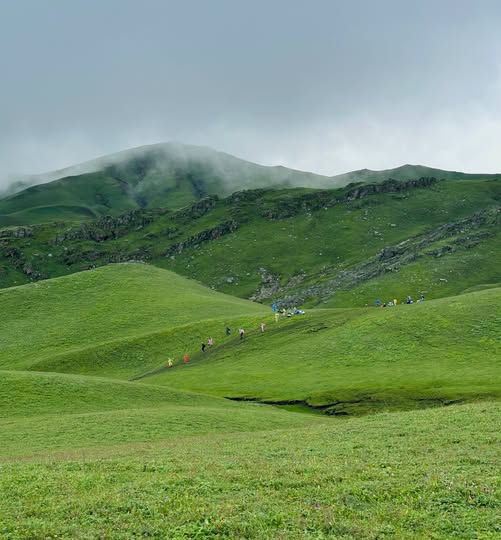
Badimalika Temple, located at an altitude of approximately 4,200 meters above sea level in Bajura, Nepal, is one of the country's most remarkable pilgrimage destinations. Surrounded by magnificent Himalayan landscapes, vast alpine meadows, colorful wildflowers and remote mountain scenery, Badimalika is becoming increasingly popular among both pilgrims and adventure travelers.
The annual Badimalika Temple Festival 2026 is an especially important time to visit this sacred Himalayan destination. According to the 2083 B.S. calendar, the festival rituals are scheduled to begin from Bhadra 1, 2083 (August 17, 2026), while the main worship ceremony is scheduled for Bhadra 11, 2083 (August 27, 2026). Janai Purnima falls on Bhadra 12 (August 28, 2026), making the main Badimalika पूजा one day before the festival.
Starting the religious activities before the main पूजा helps accommodate the large number of devotees who travel to Badimalika every year. The main ceremony traditionally takes place on Shukla Chaturdashi, the day before Janai Purnima, and the area becomes an important center of religious activity during this period.
For travelers looking for a combination of pilgrimage, Himalayan trekking, natural beauty and cultural experience, Badimalika offers a unique journey far from Nepal's more established tourist routes.
Badimalika Temple Festival 2026 Dates
If you are planning a Badimalika pilgrimage in 2026, the important dates are:
- Festival and पूजा activities begin: Bhadra 1, 2083 B.S. / August 17, 2026
- Main Badimalika पूजा: Bhadra 11, 2083 B.S. / August 27, 2026
- Janai Purnima: Bhadra 12, 2083 B.S. / August 28, 2026
The 2083 B.S. calendar confirms that Bhadra 1 corresponds to August 17 and Bhadra 11 to August 27, while Janai Purnima falls on August 28, 2026.
Travelers should remember that the pilgrimage takes place in a remote, high-altitude region. Weather, trail conditions and local arrangements can affect travel plans, so visitors should plan their journey carefully.
Why Is Badimalika Temple Important?
Badimalika is considered one of the important religious sites of western Nepal. The temple is dedicated to Badimalika Mata, and thousands of devotees visit the shrine seeking blessings and spiritual fulfillment.
According to local religious beliefs, visiting and worshipping at Badimalika can help devotees fulfill their wishes and bring blessings, good health and prosperity. These beliefs have been passed down through generations and remain an important part of the cultural identity of the region.
The annual festival attracts pilgrims from different districts of Nepal. Traditionally, groups from Bajura, Doti and Jumla travel toward Badimalika carrying पूजा materials as part of the long-standing religious tradition.
Devotees also arrive from other parts of Nepal and neighboring India, making the annual Badimalika Festival an important pilgrimage event in the Himalayan region.
Badimalika at 4,200 Meters: A Himalayan Pilgrimage
One of the most remarkable features of Badimalika is its location.
At approximately 4,200 meters above sea level, the temple stands amid dramatic Himalayan terrain. The journey itself is an important part of the experience. Unlike many easily accessible temples in Nepal, reaching Badimalika requires travelers to pass through remote mountain landscapes and alpine terrain.
The higher elevation provides spectacular views of mountains, rolling green hills and high-altitude pastures. During the appropriate season, the surrounding hills and meadows become covered with colorful flowers, creating an extraordinary natural setting around the sacred temple.
For adventure travelers, the journey to Badimalika is not simply a religious trip. It is also a high-altitude trekking experience in western Nepal.
Because of the elevation, travelers should prepare properly for the journey. Walking at 4,000 meters or above can be physically demanding, particularly for visitors who are not accustomed to high-altitude environments.
The Natural Beauty of Badimalika
Badimalika is famous for much more than its temple.
The wider Badimalika region contains some of the most beautiful alpine landscapes in Bajura. The area is characterized by open grasslands, mountain ridges, high-altitude meadows and colorful seasonal flowers.
Among the well-known attractions around Badimalika are:
Triveni
The Triveni area is considered one of the important natural and religious attractions of the Badimalika region. The landscape around Triveni provides beautiful views and adds to the spiritual atmosphere of the pilgrimage.
22 Patan
The 22 Patan, or high-altitude pasturelands, are among the most spectacular landscapes encountered during the journey to Badimalika. Wide-open meadows stretch across the mountain terrain, creating excellent scenery for photography and nature observation.
During the flowering season, these highland pastures can become particularly attractive, with colorful alpine flowers covering the landscape.
Khetibeti
Khetibeti is another interesting location associated with Badimalika. Local legends connect the area with the ancient story of the battle between Bhagwati and Mahishasura.
According to local folklore, rice that was being planted during the legendary battle remained in its original condition. Such stories add an important cultural and spiritual dimension to the landscape.
Bishnupani
Bishnupani is another notable site in the Badimalika area and forms part of the wider pilgrimage and trekking landscape.
Dharmadwar
Dharmadwar is also considered an important attraction along the Badimalika route. The combination of religious significance and dramatic mountain scenery makes these locations memorable stops for travelers.
Wildlife and Birdlife Around Badimalika
The Badimalika region is also interesting for nature lovers.
The high-altitude environment supports a variety of Himalayan wildlife and bird species. Visitors may encounter or hear about species such as the Danphe, Nepal's national bird, Munal and musk deer, along with other Himalayan birds and animals.
Wildlife sightings cannot be guaranteed, especially during a trekking journey, but the natural environment itself is one of the major attractions of visiting this remote part of Nepal.
Travelers should always follow responsible tourism practices. Avoid disturbing wildlife, do not leave plastic or other waste along the trail, and respect the fragile alpine environment.
Badimalika Festival and Janai Purnima
The Badimalika Festival has a particularly strong connection with Janai Purnima, one of Nepal's important Hindu festivals.
The main worship at Badimalika traditionally takes place on the day before Janai Purnima, known as Shukla Chaturdashi. In 2026, this corresponds to Bhadra 11, 2083 B.S., or August 27, 2026. Janai Purnima falls on August 28, 2026.
Because large numbers of pilgrims travel to the area around this period, religious activities begin before the main पूजा. This provides devotees with more opportunities to participate in rituals and reduces the pressure of having everyone arrive on a single day.
The festival is therefore not only a religious event but also an important cultural gathering that brings together communities from different parts of Nepal.
Growing Popularity of Badimalika
For many years, Badimalika remained relatively unknown outside western Nepal. Limited transportation, difficult trails and a lack of tourism promotion meant that comparatively few travelers visited the region.
That situation has gradually changed.
The increasing popularity of adventure tourism, pilgrimage tourism and lesser-known destinations in Nepal has brought greater attention to Badimalika, Bajura.
Travelers are increasingly interested in destinations that offer authentic cultural experiences and natural landscapes away from crowded tourist centers. Badimalika fits this trend perfectly.
The combination of a sacred temple, high-altitude trekking, alpine meadows, Himalayan scenery and local traditions makes it an attractive destination for travelers looking beyond conventional Nepal tours.
The New Badimalika Temple
The construction of a new pagoda-style Badimalika Temple has added another attraction to the area.
The artistic temple structure has strengthened the visual appeal of the pilgrimage destination while providing an important new religious landmark for devotees.
The temple and its surrounding mountain landscape offer excellent opportunities for photography, particularly when the weather is clear and the surrounding hills and mountains are visible.
For visitors interested in Nepalese architecture, religion and culture, the temple provides another reason to include Badimalika in a western Nepal travel itinerary.
Is Badimalika Suitable for International Travelers?
Yes, Badimalika can be an interesting destination for international travelers, particularly those interested in Himalayan trekking, cultural tourism, pilgrimage and off-the-beaten-path travel.
However, it is important to understand that Badimalika is not a conventional sightseeing destination such as Kathmandu, Pokhara or Chitwan.
The journey involves remote roads and trekking through high-altitude terrain. Accommodation and facilities are more basic than in Nepal's major tourist cities.
International travelers should therefore approach Badimalika as an adventure and cultural journey, rather than a luxury holiday.
The experience is especially rewarding for travelers who enjoy walking, nature, local culture and remote mountain environments.
Best Time to Visit Badimalika
The best time to visit Badimalika depends on your purpose.
For pilgrims, the Badimalika Festival around Janai Purnima is the most significant period. In 2026, the main पूजा is scheduled for August 27, followed by Janai Purnima on August 28.
For trekkers and nature lovers, the surrounding landscapes are particularly attractive when the alpine meadows are green and seasonal flowers are blooming.
However, weather conditions in the Himalayas can change quickly. During the monsoon period, roads and mountain trails may also be affected by rain, landslides and muddy conditions.
Anyone planning a Badimalika Trek should check the latest local weather and trail conditions before departure.
How to Prepare for a Badimalika Trek
A journey to Badimalika requires more preparation than a standard Nepal sightseeing tour.
Travelers should consider:
Physical preparation:
The trek reaches around 4,200 meters, so regular walking and basic physical fitness are important.
Altitude awareness:
High altitude can affect travelers even when they are physically fit. A gradual ascent and adequate rest are important.
Warm clothing:
Temperatures can be cold at high elevations, particularly in the early morning and evening.
Good trekking shoes:
The terrain can be uneven and challenging, so comfortable and sturdy footwear is recommended.
Rain protection:
Weather can change quickly in the mountains. A waterproof jacket and protection for your backpack are useful.
Water and snacks:
Carry adequate drinking water and energy-rich snacks, particularly on remote sections of the route.
Travel with experienced local support:
A local guide can be extremely useful for navigation, cultural interpretation, accommodation arrangements and understanding local conditions.
Responsible Tourism in Badimalika
As Badimalika becomes more popular, responsible tourism is increasingly important.
The region contains fragile alpine ecosystems that can easily be damaged by unmanaged tourism. Visitors should avoid littering and carry their waste back whenever proper disposal facilities are unavailable.
Travelers should also respect local religious customs. Badimalika is a sacred pilgrimage destination, so visitors should dress appropriately and follow instructions around the temple and religious areas.
Supporting local communities through local accommodation, food services, guides and porters can also help ensure that tourism benefits the people living in the region.
Why Visit Badimalika in 2026?
The Badimalika Festival 2026 offers a special opportunity to experience one of Nepal's lesser-known pilgrimage destinations during its most important religious period.
With festival activities beginning on August 17, 2026, and the main पूजा taking place on August 27, 2026, travelers have an opportunity to witness traditional religious practices while exploring the dramatic landscapes of Bajura.
For pilgrims, the journey offers spiritual significance.
For trekkers, it provides a challenging Himalayan adventure.
For photographers, it offers dramatic mountain scenery and colorful alpine landscapes.
For cultural travelers, it provides an opportunity to experience local traditions that remain deeply connected to the communities of western Nepal.
And for travelers looking for an authentic destination away from Nepal's busy tourist routes, Badimalika provides an unforgettable experience.
Plan Your Badimalika Journey
Badimalika is more than a temple at the top of a mountain. It is a destination where religion, culture, nature and Himalayan adventure come together.
The annual festival attracts thousands of devotees, while the surrounding landscapes are increasingly attracting trekkers, photographers and adventure travelers. From the sacred Badimalika Temple at approximately 4,200 meters to the beautiful alpine pastures, Triveni, 22 Patan, Khetibeti, Bishnupani and Dharmadwar, the region offers many reasons to explore western Nepal.
If you are planning a Badimalika pilgrimage or Badimalika Trek in 2026, careful preparation is essential, especially because of the high altitude and remote nature of the destination.
The Badimalika Festival begins on Bhadra 1, 2083 B.S. (August 17, 2026), with the main पूजा on Bhadra 11 (August 27, 2026), one day before Janai Purnima on August 28, 2026.
For travelers seeking a meaningful Himalayan journey that combines spirituality, culture and breathtaking natural beauty, Badimalika, Bajura is a destination worth discovering.